A talk at the February 2024 Code Green London meetup, an evening run with Climate Action Tech and hosted by Red Badger. The slides carry the subtitle “& the Tech Carbon Standard”.
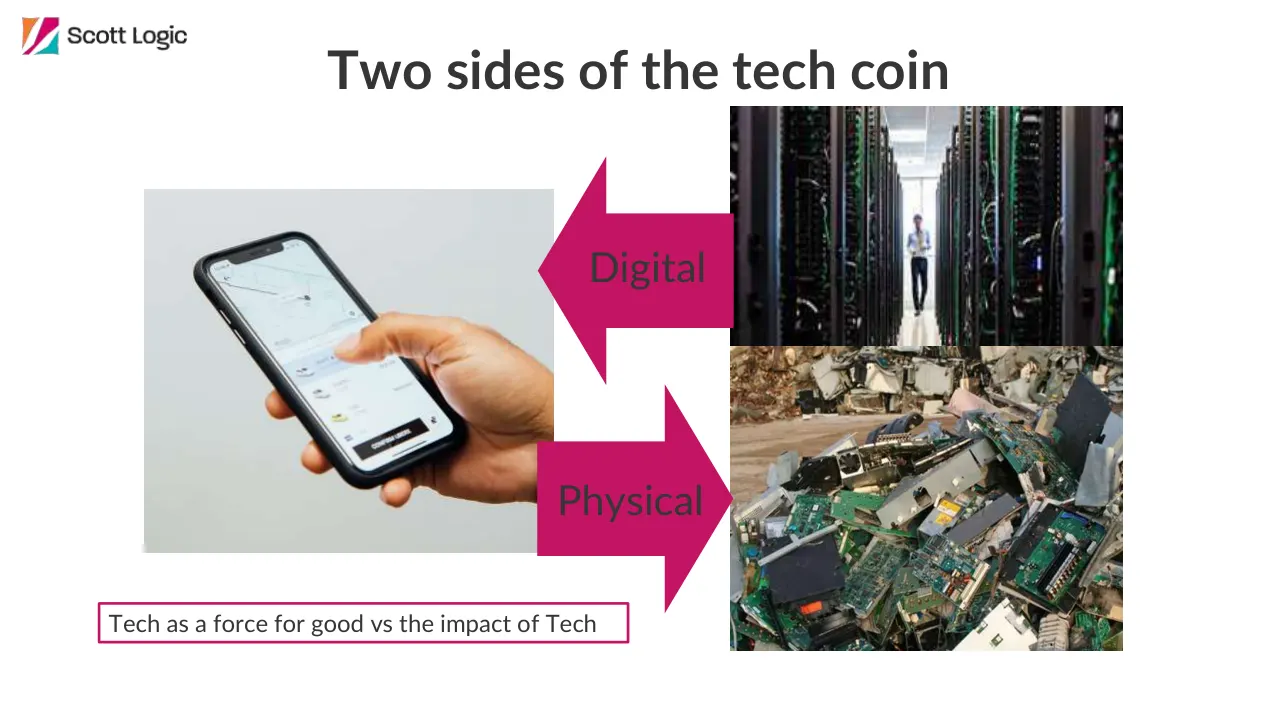
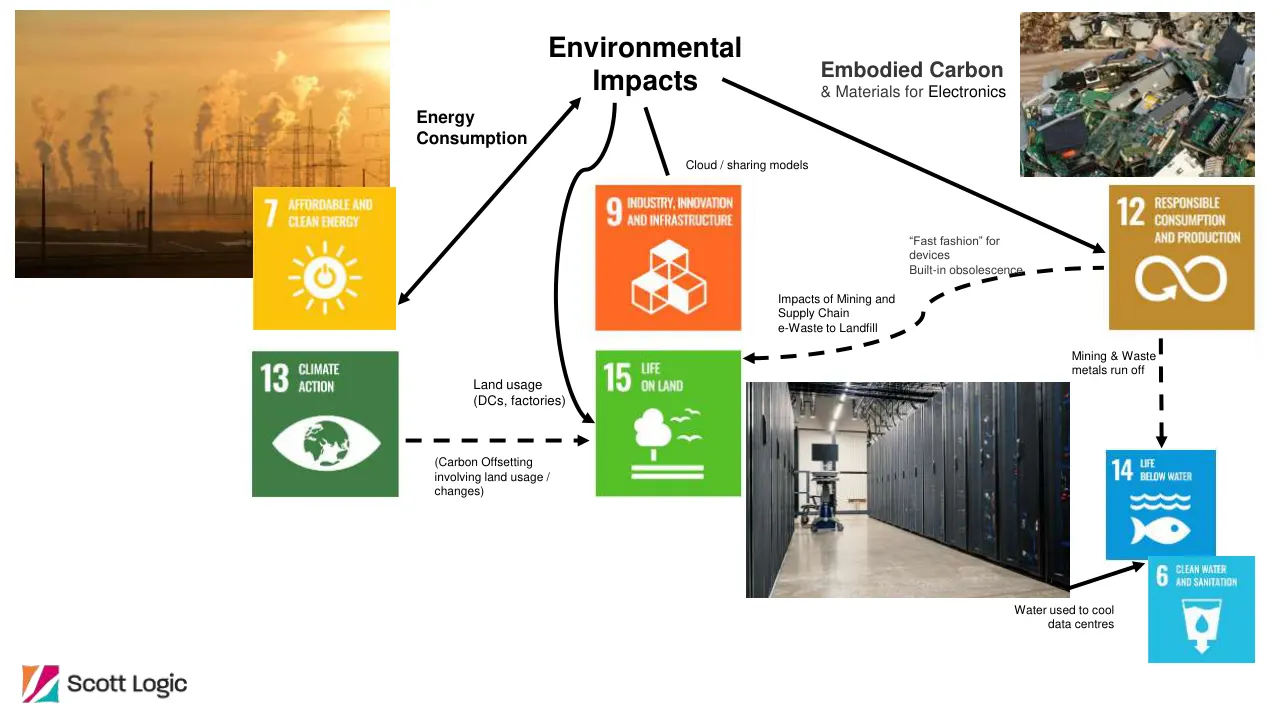
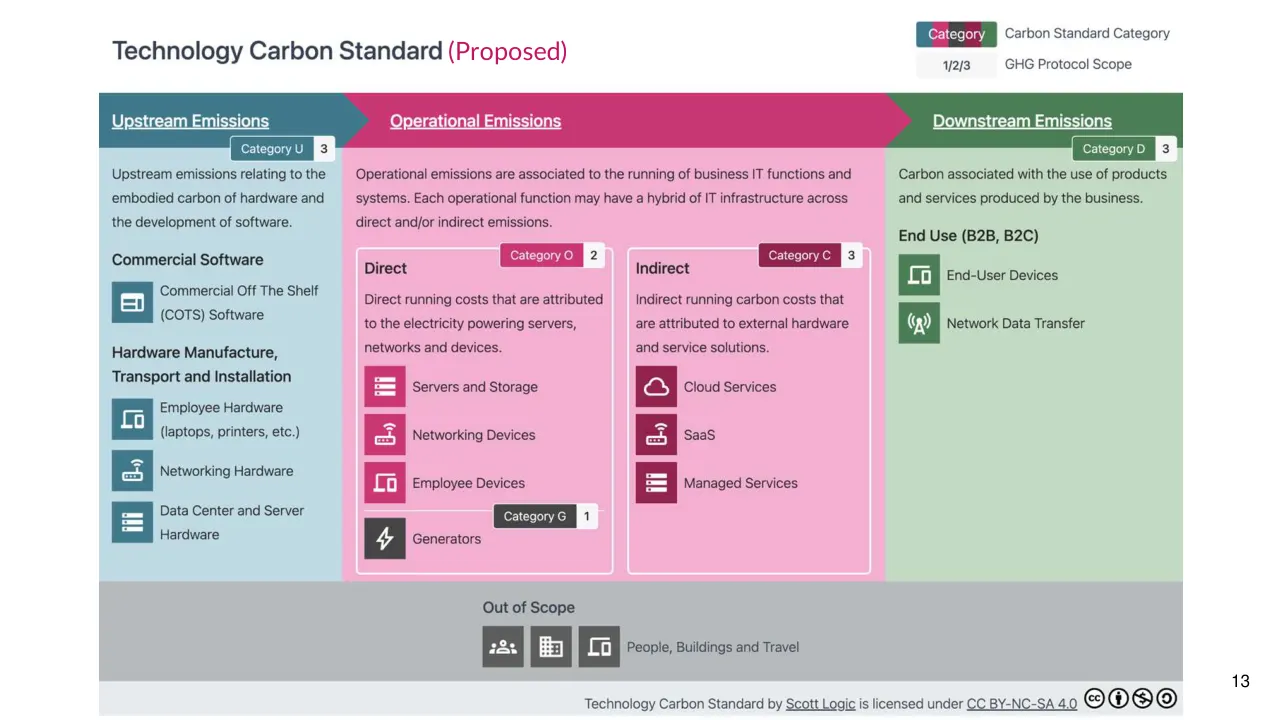
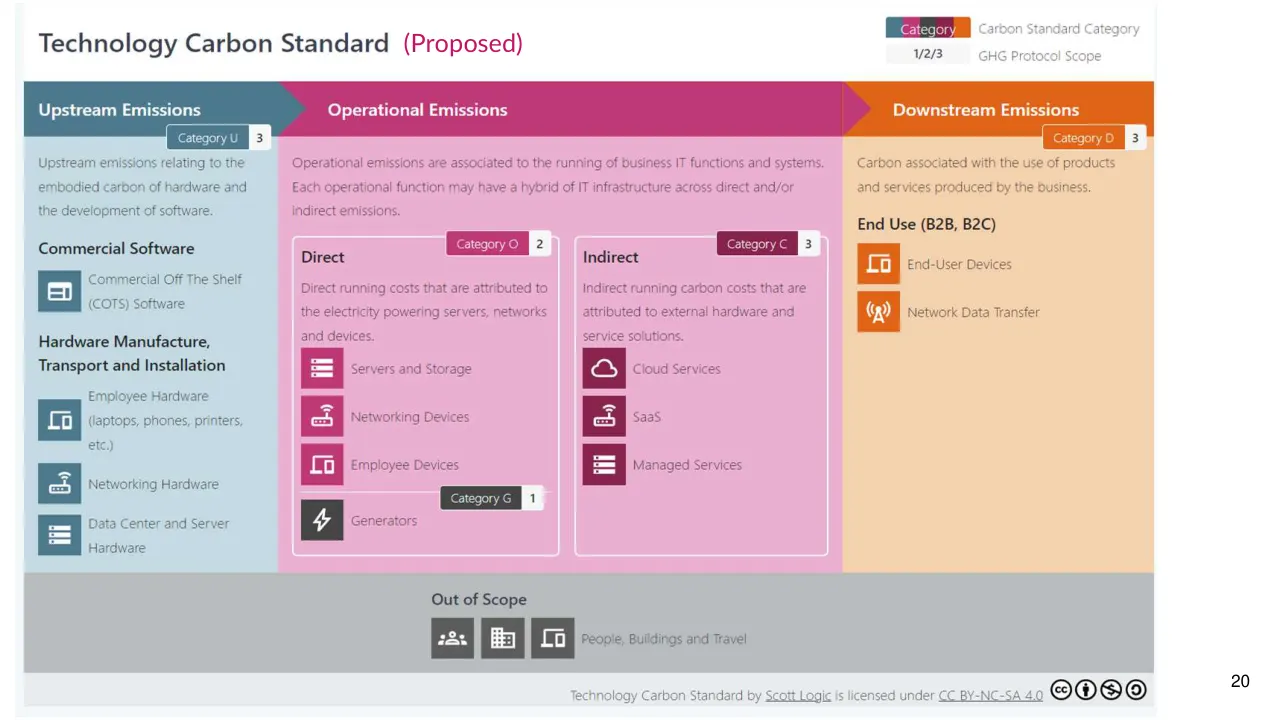
The talk started with the two sides of the tech coin: technology as a force for good, and its physical impacts, from energy and embodied carbon to mining, water and e-waste. It then asked which software is worth optimising first. Widely deployed open source software has a huge downstream footprint, so maintainers’ defaults and our choice of dependencies matter. It finished with the value of open data and shared reference points, the Green Software Foundation’s principles, and the proposed Technology Carbon Standard, which Scott Logic had launched at State of Open Con earlier that month.
I went back to Code Green London in January 2025 with an update on using the standard.
Slides
-
Slide 1 text
Developing more Sustainable Software with Open Source & the Tech Carbon Standard Oliver Cronk, Feb 2024
-
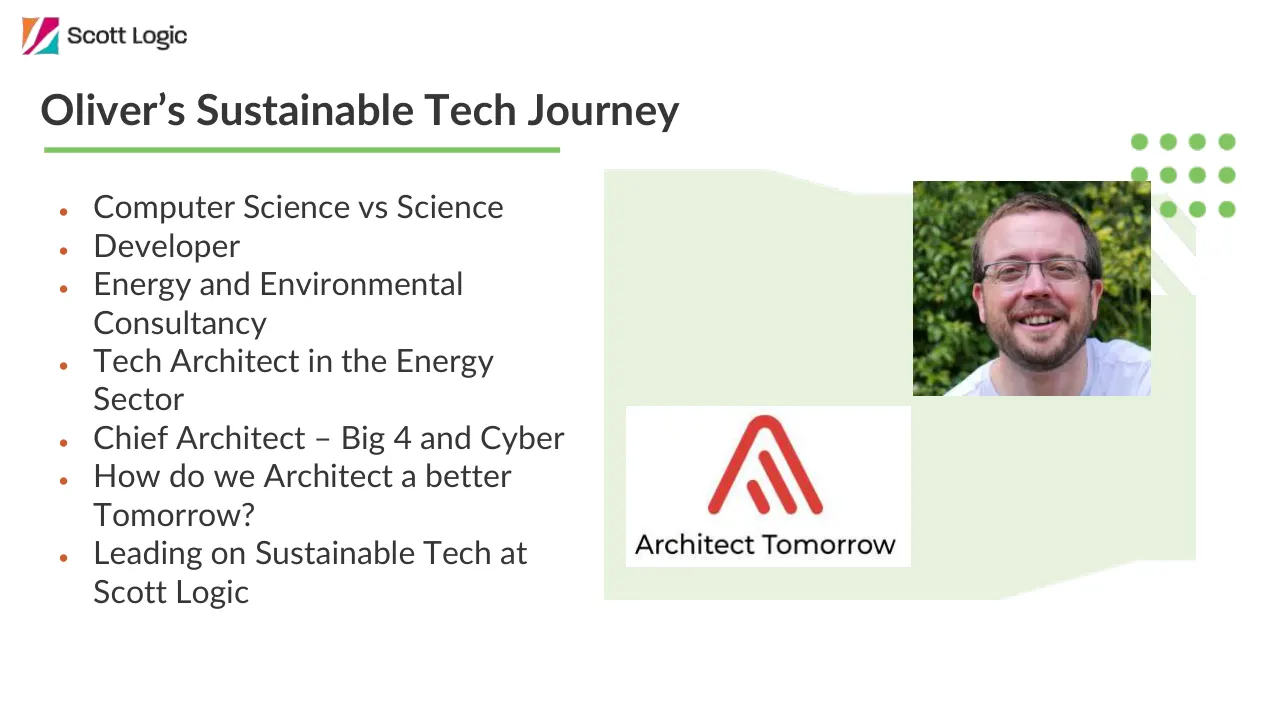
Slide 2 text
• Computer Science vs Science • Developer • Energy and Environmental Consultancy • Tech Architect in the Energy Sector • Chief Architect – Big 4 and Cyber • How do we Architect a better Tomorrow? • Leading on Sustainable Tech at Scott Logic Oliver’s Sustainable Tech Journey
-
Slide 3 text
Where are you on your tech sustainability journey?
-
Slide 4 text
Two sides of the tech coin Digital Physical Tech as a force for good vs the impact of Tech
-
Slide 5 text
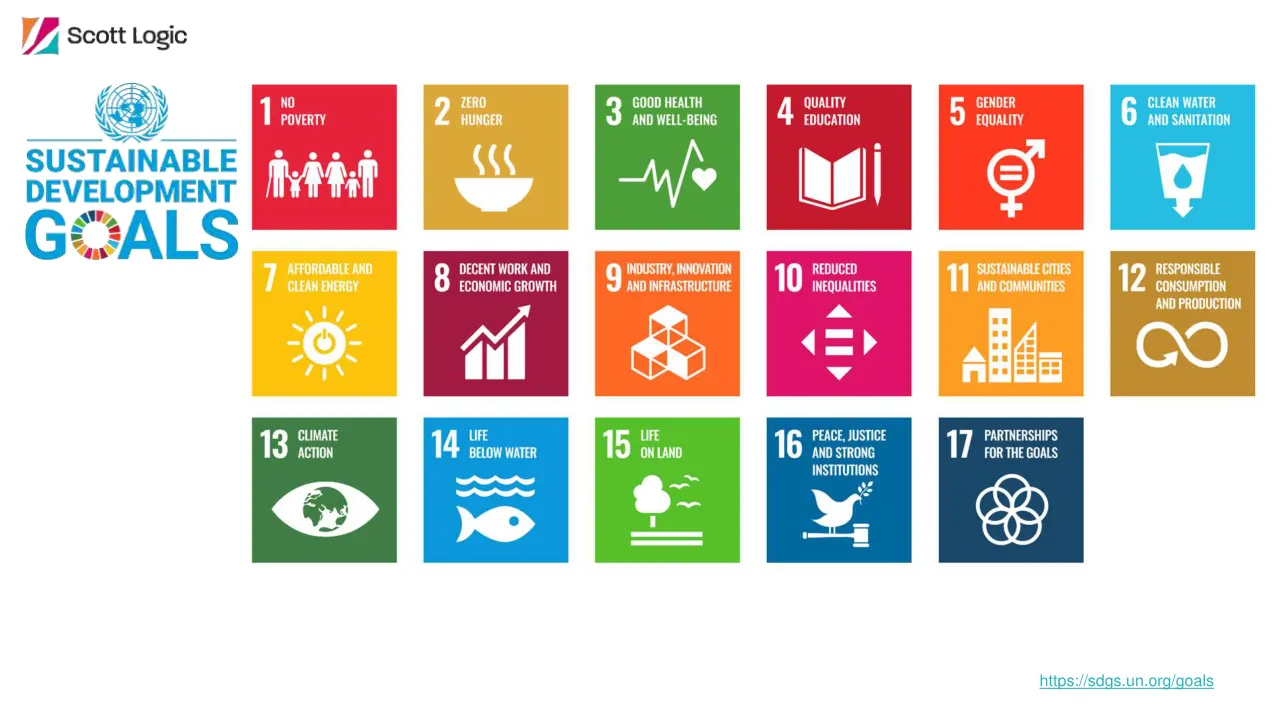
UN Sustainable Development Goals. https://sdgs.un.org/goals
-
Slide 6 text
Impact of Technology Environmental Impacts (Carbon Offsetting involving land usage / changes) Energy Consumption Embodied Carbon & Materials for Electronics Land usage (DCs, factories) Impacts of Mining and Supply Chain e-Waste to Landfill Cloud / sharing models “Fast fashion” for devices Built-in obsolescence Mining & Waste metals run off Water used to cool data centres
-
Slide 7 text
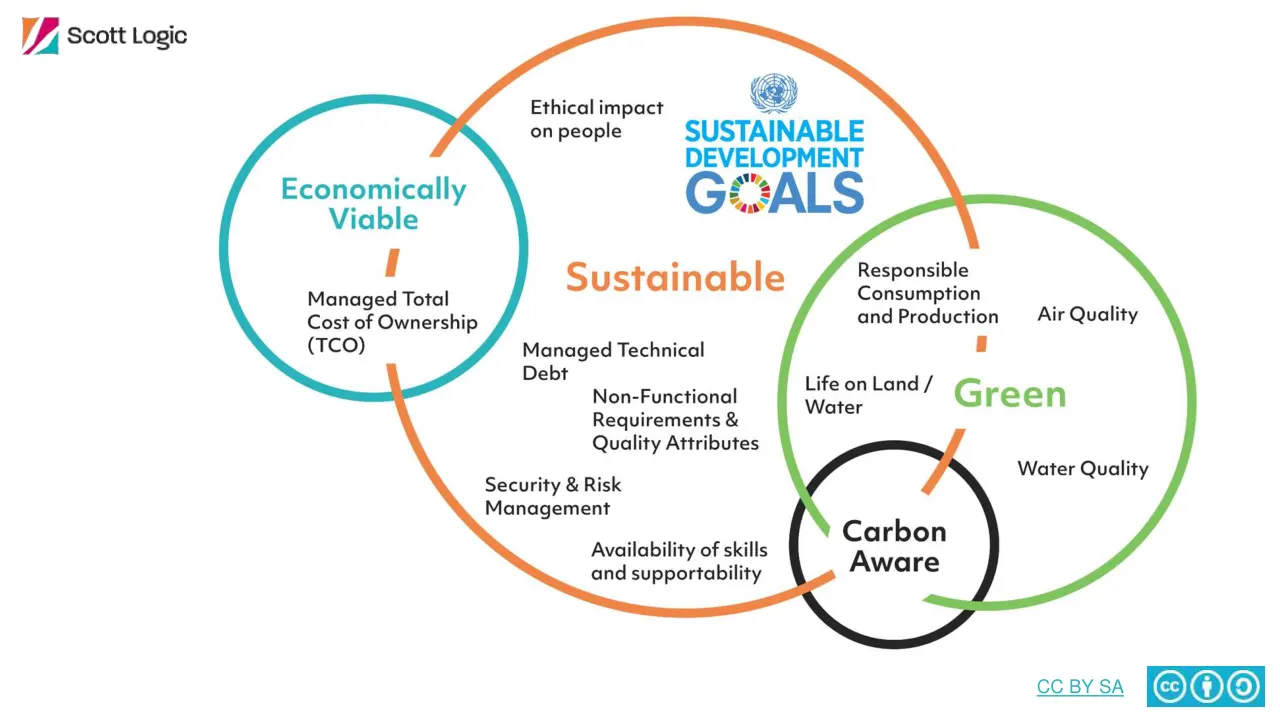
Sustainable, Green and Carbon Aware: a Venn diagram linking economically viable, the Sustainable Development Goals, green and carbon aware. CC BY SA
-

Slide 8 text
Lets just design and code better software?...
-
Slide 9 text
… but what software?!
-
Slide 10 text
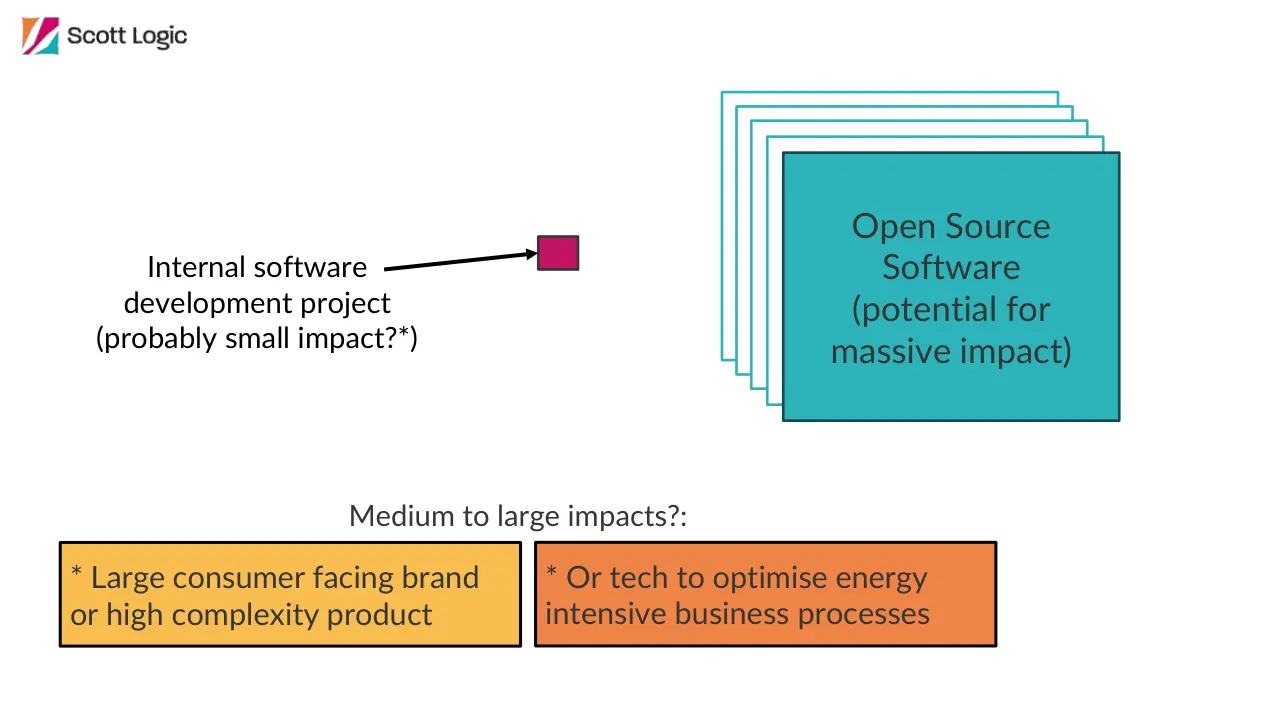
Internal software development project (probably small impact?). Open Source Software (potential for massive impact). Medium to large impacts?: Large consumer facing brand or high complexity product; or tech to optimise energy intensive business processes
-
Slide 11 text
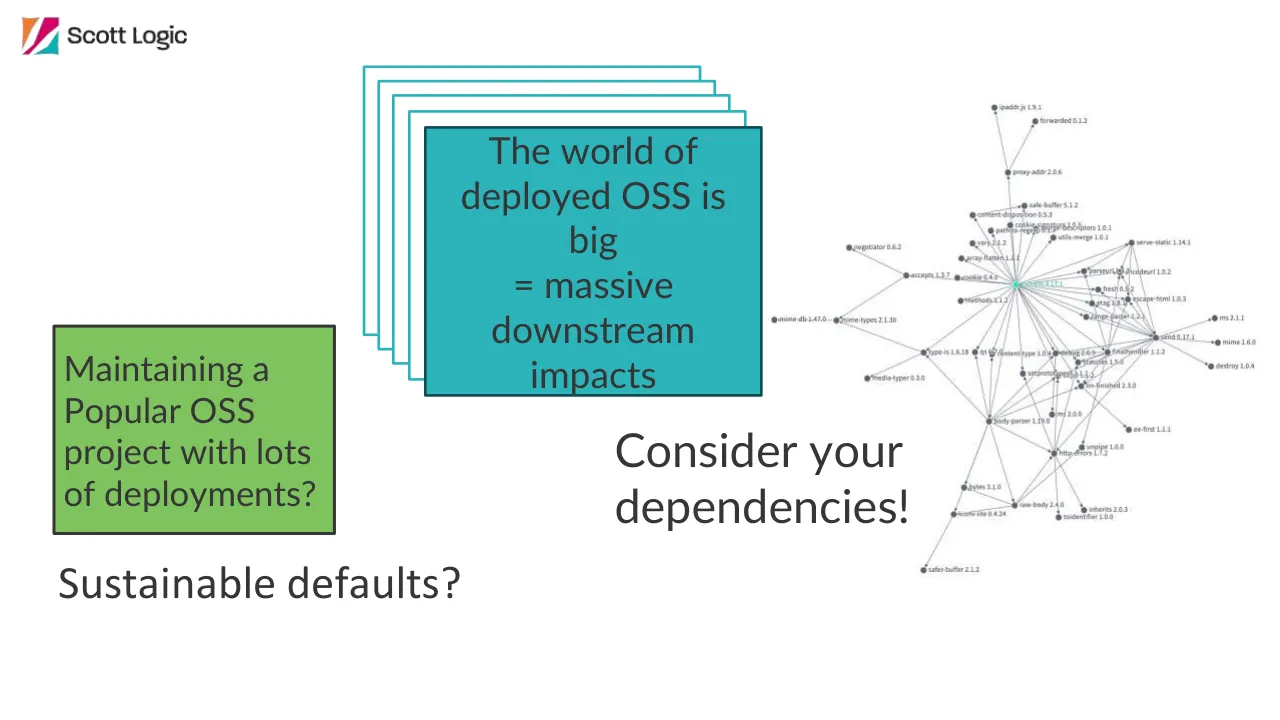
Maintaining a Popular OSS project with lots of deployments? The world of deployed OSS is big = massive downstream impacts. Sustainable defaults? Consider your dependencies!
-
Slide 12 text
Beyond code - identifying significant areas of the tech landscape…
-
Slide 13 text
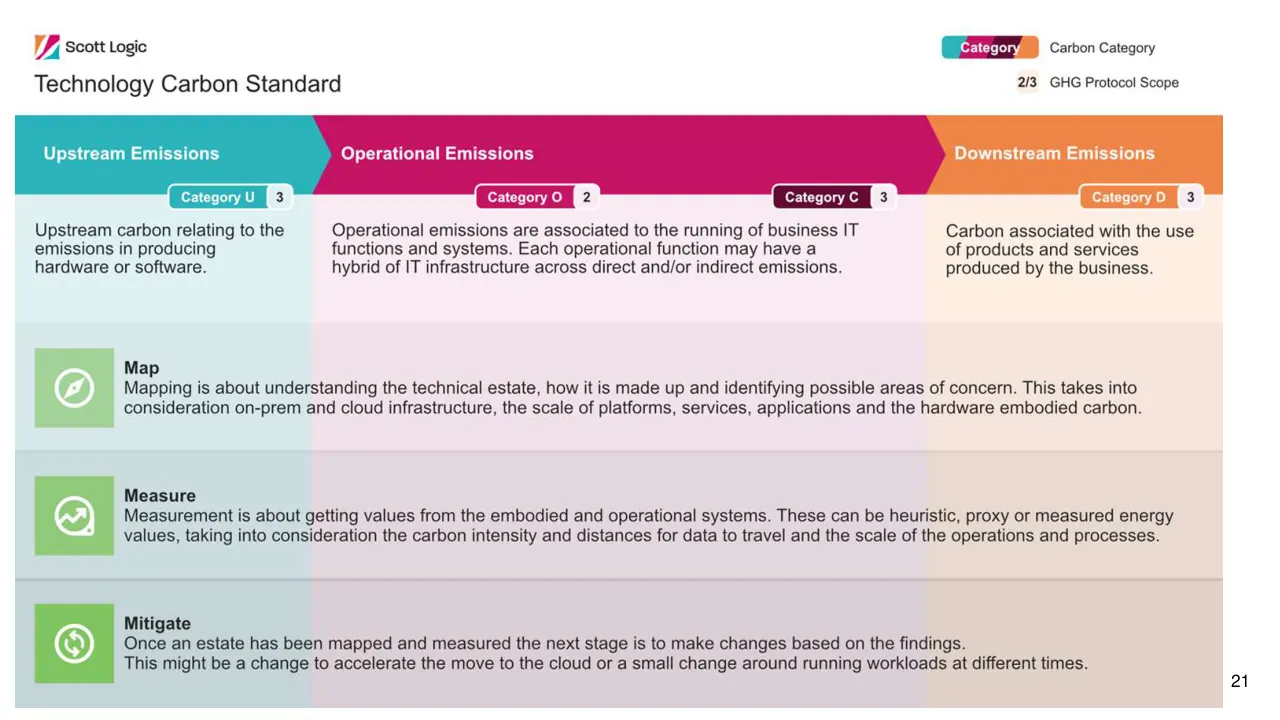
Technology Carbon Standard (Proposed): Upstream Emissions, Operational Emissions, Downstream Emissions
-
Slide 14 text
Value of Open Data, Sustainable Tech Advice and Projects
-
Slide 15 text
Global challenge - So use the power of the commons Transparency = peer review & refinement Shared reference data points to find significant areas and ignore the noise
-
Slide 16 text
E.g. how much power does device X consume? How much energy did training an AI model take?
-
Slide 17 text
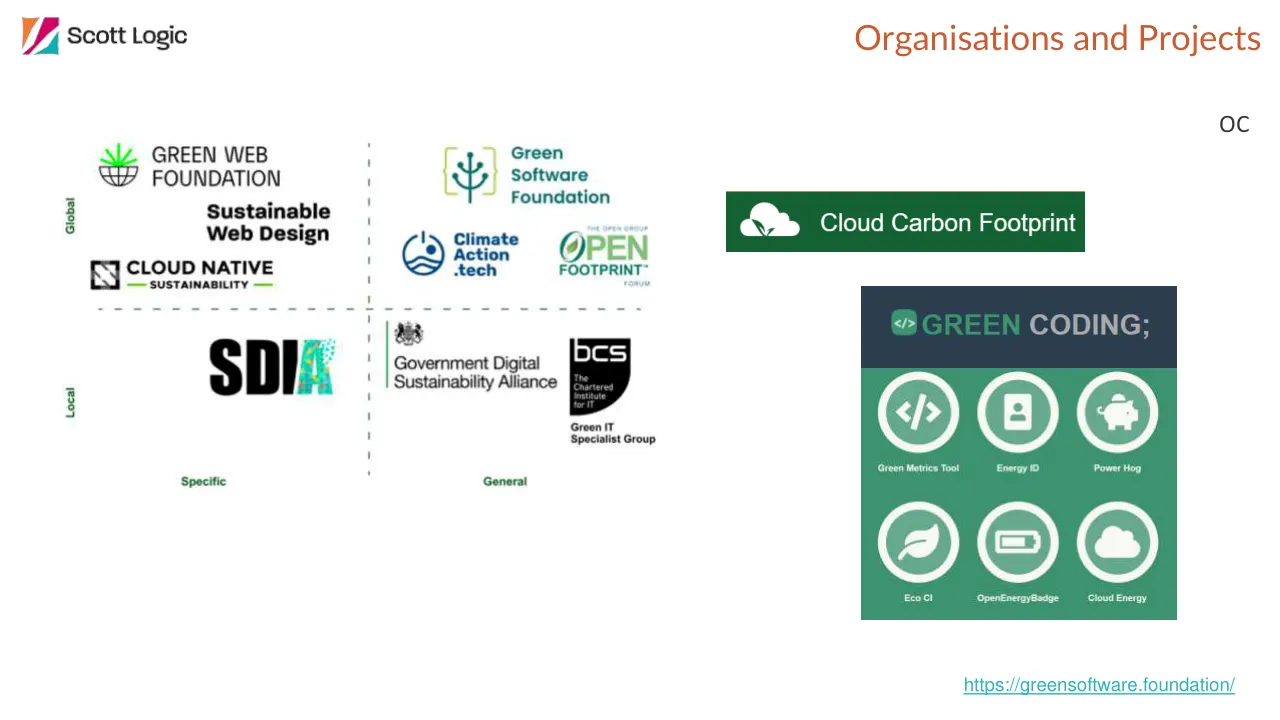
https://greensoftware.foundation/ Organisations and Projects
-
Slide 18 text
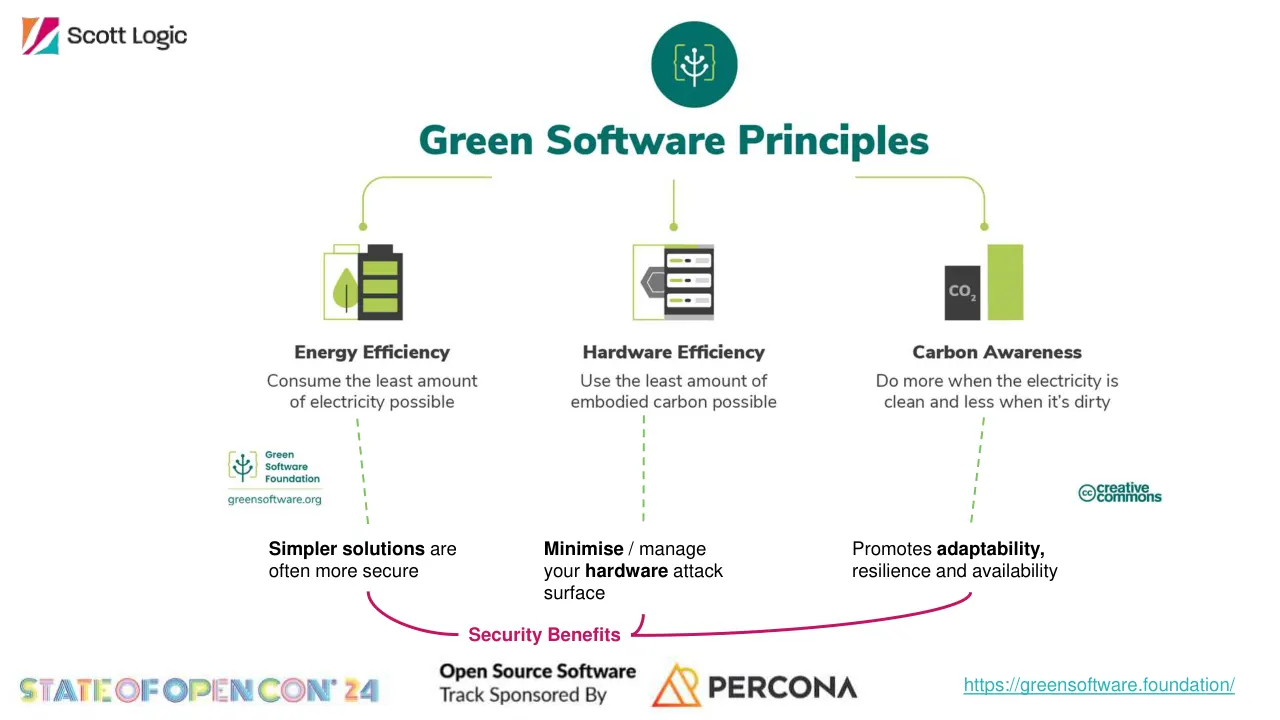
https://greensoftware.foundation/ Simpler solutions are often more secure Minimise / manage your hardware attack surface Security Benefits Promotes adaptability, resilience and availability
-
Slide 19 text
What are we doing? Our Open Source project to help navigate the complexity of Technology Sustainability…
-
Slide 20 text
Technology Carbon Standard (Proposed): Upstream Emissions, Operational Emissions, Downstream Emissions
-
Slide 21 text
Technology Carbon Standard: Map, Measure, Mitigate
-
Slide 22 text
Want to collaborate? • https://www.techcarbonstandard.org • https://blog.scottlogic.com • Get involved in our project / GSF etc • Feel free to contact us for a friendly chat